
Walking the Grade: A Town, a Trail, and the Work of Becoming
April 24th 2026
Written by Julie Judkins, Just-Trails
There is a particular quality to early morning light in Saluda. It comes in sideways off the Blue Ridge, soft and unhurried. On April 23rd, 2026, a group of planners, community members, business owners, and trail advocates gathered beside a stretch of old Norfolk Southern track at the town's Visitors Center, coffees in hand (courtesy of Wakey Monkey), for the Saluda Grade Trail Site Walk. The morning was spent listening to and learning from locals as the Site Walk took the group on a place-based tour through six stops across Saluda, connecting the town's history, businesses, parks, and community spaces to the larger story of what this trail could become.
Stop One: Saluda Visitors Center
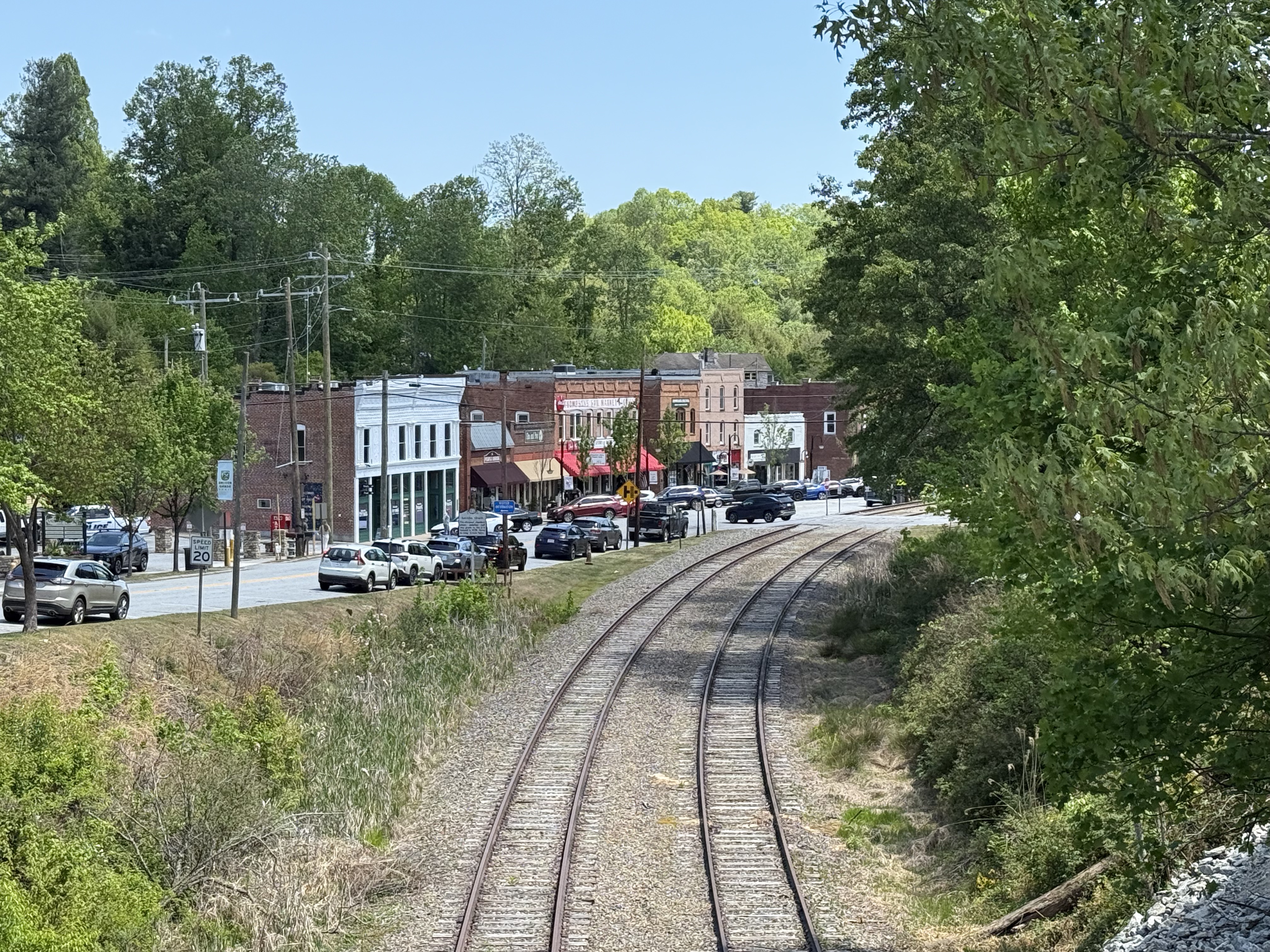
The site walk began at the old Norfolk Southern line running through Saluda. The tracks are still there, pointing toward the mountain grade that gave this trail its name. For now, you can park alongside the tracks where the multi-use trail will be developed. Commissioner Kevin Burnett welcomed the group, kicking things off with excitement and introducing Steven Orr, Saluda City Manager. He shared how the long-term planning for the development of Saluda’s commercial district, including support from the North Carolina Main Street Program, has been taking shape to support downtown investment and community businesses. "The last thing you want with any of these projects is to be catching up," Orr said. "You want to be ahead of the game by at least two to five years, because investors and community members are going to start looking."
Having moved to city government from real estate development, Steve is thinking about how to set up Saluda for long-term investment along the trail that may be five or ten years away. Investors who have transformed Trailside neighborhoods in other communities were positioned and ready before the first rail was pulled, rather than scrambling to keep up with a finished trail.
"You've got to think five to ten years forward — or you're way behind. You might as
well get out of the game." — Steven Orr, City Manager
Stop Two: The Historic Depot Museum
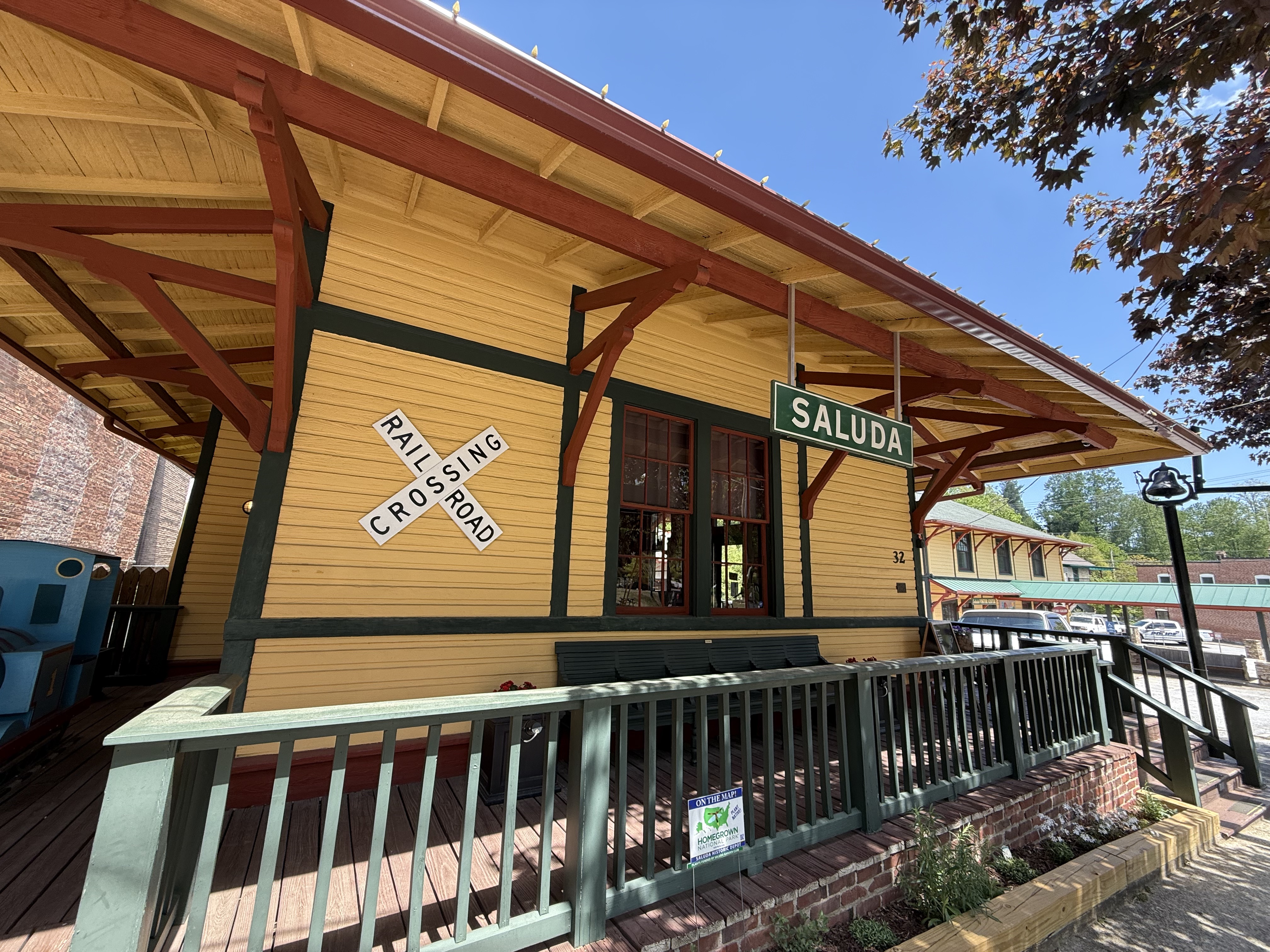
The Saluda Historic Depot Museum holds the history of the railroad from its opening in the late 19th century to its heyday as a critical route connecting the Blue Ridge to the Upstate. In the early 1900s, Saluda was a busy rail corridor, with 321,000 people passing through annually. The Saluda Grade, at its steepest 5% grade, was the most demanding standard-gauge mainline railroad grade in the United States, requiring helper engines and extraordinary skill to navigate. Trains were pushed up; runaway events going down were not uncommon. The grade is engineering history.
Museum chair Mike Reeves walked the group through the careful work of restoration and interpretation at the Historic Depot. The original bright colors — yellow, green, red — have been restored after being buried under later paint, and the depot now sits on the National Register of Historic Places. The museum currently draws an estimated 10,000 visitors annually, a number expected to grow substantially once the trail opens.
Stop Three: Henry's Nature Center
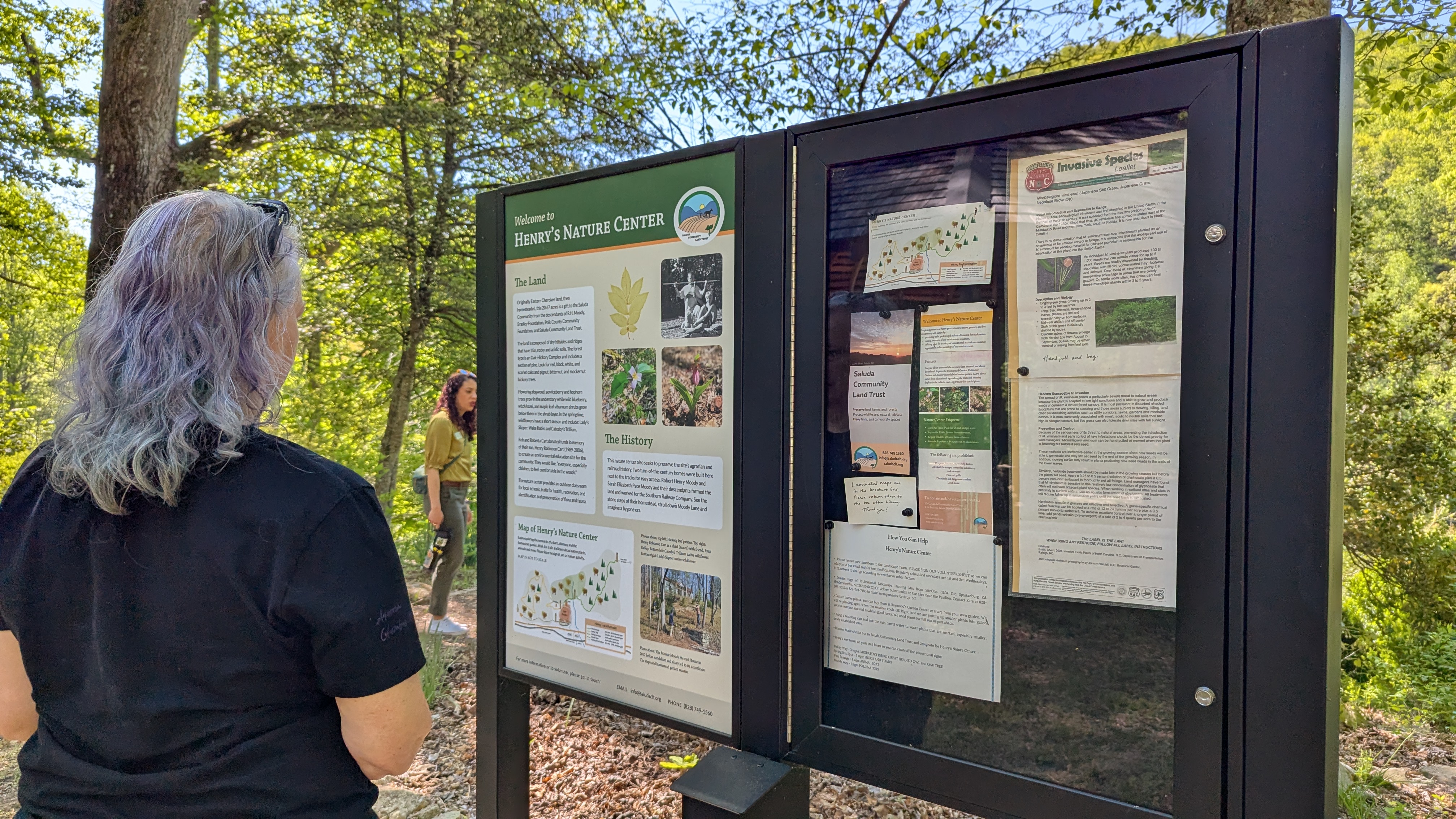
Gerard Pendergast, President of the Saluda Community Land Trust, led the group through Henry’s Nature Center, a 20-acre community environmental education space preserving railroad homestead sites, turn-of-the-century farmland, and accessible walking trails.
The workers of the Southern Railway Company who built the Saluda Grade lived near this spot. Across the road from the Nature Center is an area now known as Reclamation Preserve, where the African American railroad workers built their homes, a history that the land trust is committed to honoring. Madame Phoebia Cheek Sullivan, a famous Black faith healer who drew visitors from around the world in the early 20th century, also lived in this area. Madame Sullivan’s mother was believed to have been Cherokee, and the name "Saluda" itself carries Cherokee origins, and the indigenous history of Saluda is another story told in the landscape of the Center.
"People on the trail will stop here — whether to rest, meditate, or just get in touch with
nature. This place will be the center, just like the railroad hub was the center 100 years
ago." — Gerard Pendergast, Saluda Community Land Trust
Now the Trust is working to develop a continuous path from downtown Saluda, through Henry's Nature Center, Reclamation Preserve, and up to Judd's Peak, an approximately seven-mile track that will connect these historic sites and allow visitors to trace the development of Saluda alongside the railroad.
The resource center on the site will be officially opened later this summer, but has already welcomed community members for events like a Halloween trail and Easter Egg Hunt, and continues to host students to learn from the landscape’s history and ecology.
Stop Four: Green River Adventures
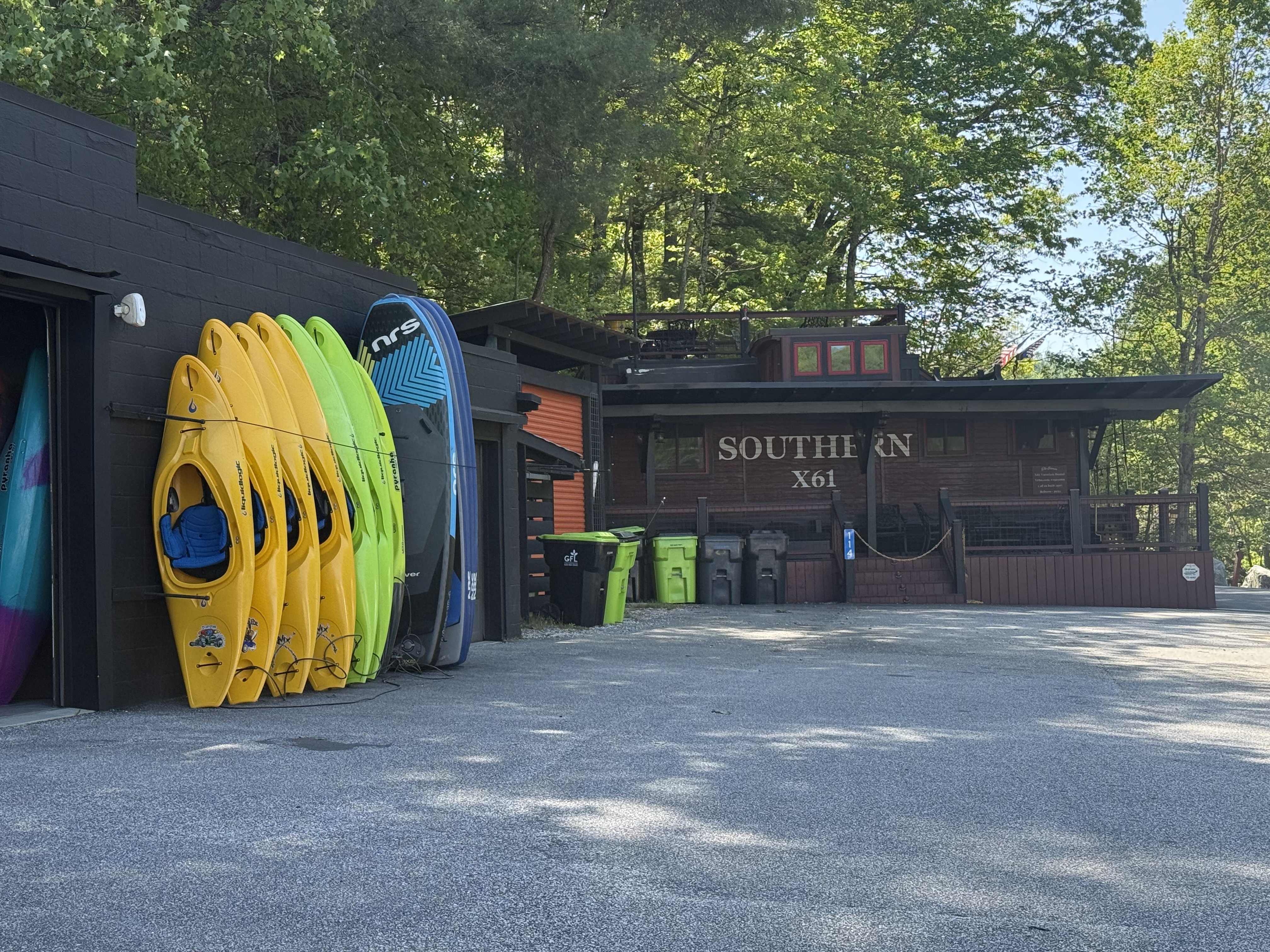
Tim Bell has been running Green River Adventures for twenty years. He’ll be celebrating this year at the Spring Green Bash, an annual free party in the parking lot with live music and beer, to be held Saturday, May 9th, and the Green River Keeper has long been the beneficiary of the raffle. Bell's story is the story of building a business in a place you love and adapting when the place changes. He and his co-founder Sara started as white-water kayakers and saw an opportunity in guided inflatable kayak tours on the Green River's upper section, which features two class-four rapids. "People felt like they'd just gone over Niagara Falls," Bell said, "without having put themselves in any real danger." That sweet spot — high sensation, manageable risk — is the core product of adventure tourism, and Bell has built twenty years around it.
Now Green River Adventures offers everything from waterfall rappels and canyon treks to technical programs in the Green River's surrounding landscape, hemmed in by the Greenville watershed and approximately 18,000 acres of the Green River Game Lands. Green River Adventures has also become the area's unofficial concierge, handing out trail maps and routing visitors toward Conserving Carolina's properties, toward the broader ecosystem of outdoor experience.
Then came Hurricane Helene.
Six businesses closed in Saluda in 2024. Green River Adventures lost approximately two-thirds of its programs. An estimated 60,000 tubers annually dropped to roughly 15,000. Road closures cut off the main artery from downtown to the river. The upper Green River was impassable with debris. And the Tuxedo hydroelectric station — which regulates lake and river levels — was destroyed by a landslide, allowing the Green River to flow naturally for the first time in nearly 100 years, but at levels too unpredictable and often too low to safely run commercial trips.
Bell's response to the disaster was to move three of four vans, all trailers, and all inflatable kayaks to the Riverside outpost on the lower Green, where guests could still visit. They also added tubing and were able to keep the business going during the tough year following the storm.
The deeper problem of the Tuxedo hydro station remains unresolved a year and a half later. The station was sold by Duke Energy six years ago to a company called Northbrook Energy, which has done nothing since then to restore, redevelop, or secure the site. The restored plant's revenue generation is valued at roughly $4.5 million, but restoration costs run higher. The gap between those numbers is where the deal keeps stalling.
This is the kind of problem that requires regional partnership, state financing, and creative deal-making to support the four river operators, multiple camps, and dozens of downstream businesses dependent on the Green River water levels. Visitors will be able to return to the river soon as trips are scheduled to resume May 23rd.
Stop Five: McCreery Park
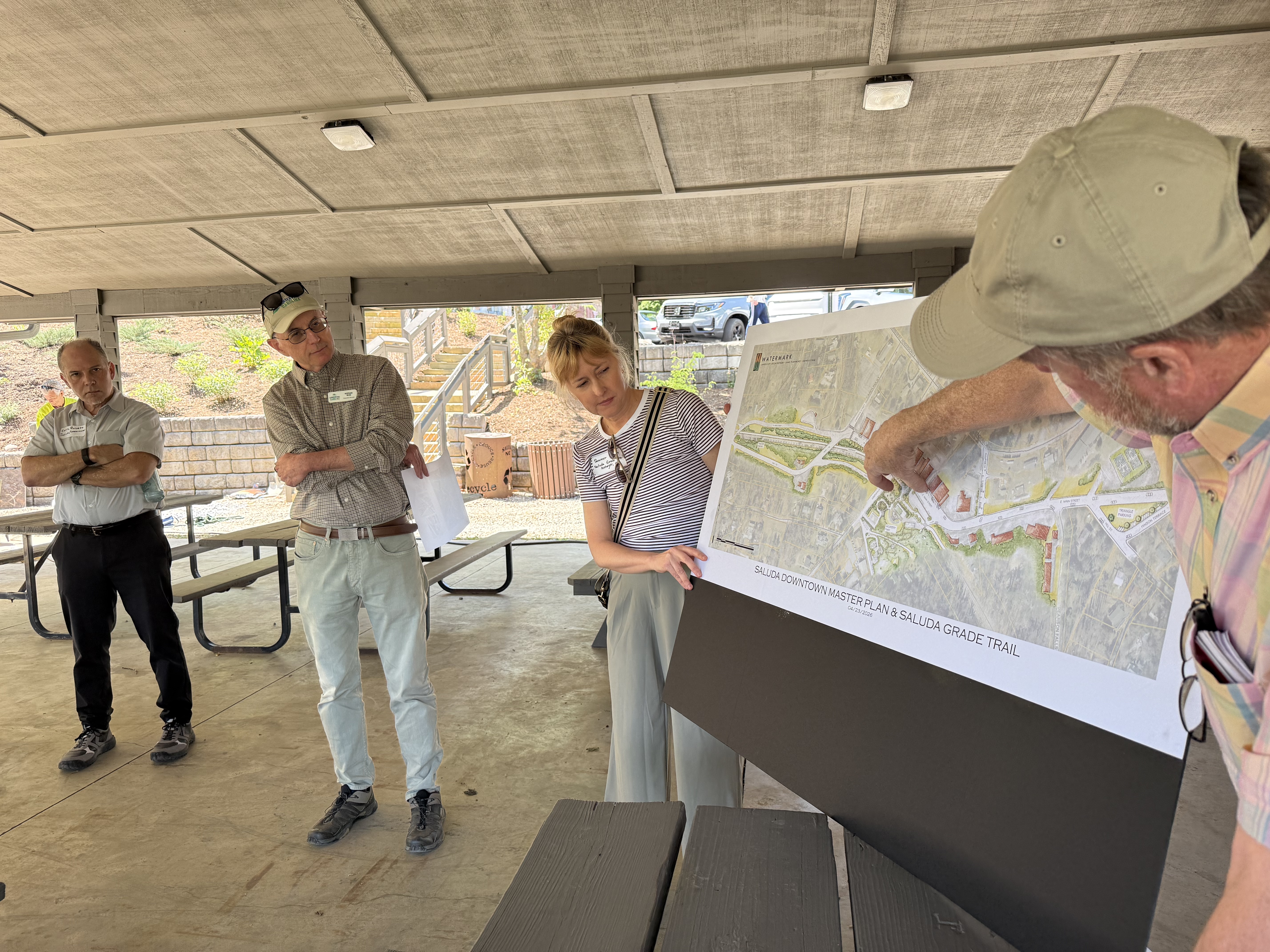
Hunter Marks, the park designer for McCreery Park, spread his plans on an easel and walked the group through what the future looks like in renderings. The park sits at the top of the grade, and trail users will be able to arrive directly into the park by foot or by car to see its preserved historic double track.
ADA compliance is central to the redesign as the park welcomes more visitors. The playground, trail access, and parking flow are all engineered to be welcoming to people of all abilities. A one-way access road will also thread through the site.
"Economically, this will be a game changer for Saluda." — Hunter Marks, Park Designer
The Ecusta Trail, which has been evolving in this same region and has taught planners a great deal about what works and what doesn't, was cited as a reference point. Polk County is actively tracking its use data. The conversations about parking, trailheads, and traffic management are all outlined in the forthcoming Economic Development Plan to prepare ahead of the wave of new trail visitors. The Saluda Grade Trail segment will connect McCreery Park to Bell Park, integrating the trail with Saluda’s pedestrian infrastructure and giving the town a more walkable and linked system.
Stop Six: Green River BBQ
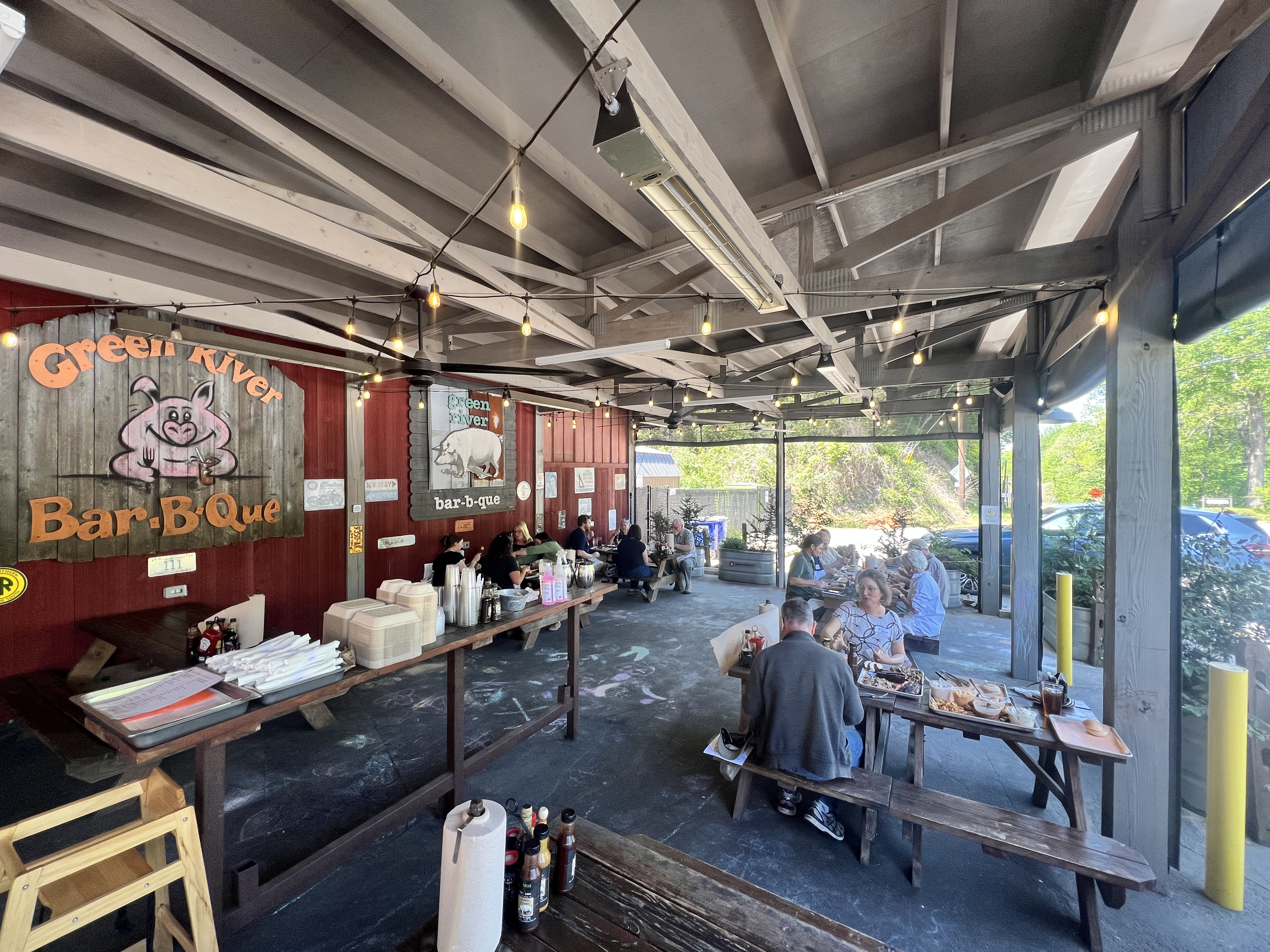
The site walk ended where lunch was waiting: Green River BBQ, a Saluda institution since 1984, now under the ownership of Tom and Bri Haas. "Playing with the smoker is so much more fun than doing the same thing on a plate over and over again," Tom said. "If it's meat, we're going to smoke it — because why not?" They smoke burgers, smoke wings, there was even a cocktail with a smoked lemon. The restaurant had been run for decades by Melanie Talbot, now a Saluda City Commissioner, who built this place into a community landmark. When her husband died, and Melanie had no interest in continuing, she shut it down in summer 2023. Tom, nearby for the summer, couldn't let it go.
"I complained about it a lot," he admitted. He and Bri bought the restaurant in January 2024 and reopened in the Spring, to an enthusiastic summer season. People drove two and three hours to come back. People who hadn't been since they were kids came back.
Then the wall behind the kitchen was badly damaged in Hurricane Helene, and mud filled the restaurant. Six months of cleaning, replacing equipment, and gutting the back of the house followed.
A GoFundMe organized by Melanie Talbot — who felt it wasn't right to ask for help when so many people had lost their homes, but who also understood that losing the BBQ was a loss for the community too — raised $36,000. The money raised helped fix the damage and welcome back the community, where as Melanie put it, "kayaks get off the river on a Saturday, and this place is packed — people sitting around barefoot, drinking beer, talking about what they did."
Tom told Melanie when he bought the place that he just wanted to make her proud. "I've always opened restaurants from scratch and sold them," he said. "It's hard to stay in a town and watch somebody else not treat your children right. I feel like we've adopted your baby and we'll take care of it."
Melanie, now speaking as a City Commissioner as much as a former owner, described watching the restaurant's fortunes rise and fall with the adventure tourism economy around it. When Tim Bell started Green River Adventures, her numbers jumped. When the zip line opened, they jumped again, and new visitors on the trail will also be able to enjoy this Saluda institution in the years to come.
The Partners Making It Possible
The Saluda Grade Trail has a coalition of amazing local partners across North Carolina and South Carolina, that bring the project to life. The site walk itself was made possible by Appalachian Regional Commission ARISE funding, with lunch and snacks sponsored by Conserving Carolina and the Saluda Tourism Development Authority. Tim's transportation kept the group moving through the morning.
Appalachian Regional Commission · Conserving Carolina · PAL · Saluda TDA · Saluda
Community Land Trust · NC Main Street Program · Polk County · Green River
Adventures · Saluda Historic Depot Museum
This project would not exist without the collaboration between Conserving Carolina, PAL, and state agencies, monthly coordination calls with Steering Committees, the two state-level four-county efforts which have all been essential to making the trail a reality.

Help Us Realize the Saluda Grade Trail
Across the United States, inactive rail lines have found new life as vibrant rail trails. Now, we have the opportunity to create a beautiful new trail along the historic Saluda Grade rail line!

A new rail trail that travels from the rolling countryside of Upstate South Carolina, through historic and vibrant small towns, and into the spectacular mountain scenery of Western North Carolina.
© 2026 Saluda Grade Trail Conservancy. All Rights Reserved | Privacy & Legal |
Site by: ALINE, A Marketing Company