
Spring Forum Recap: A Regional Roadmap Takes Shape
May 4th 2026
On April 23, over 300 people came together at Polk County High School in Columbus, North Carolina, for the Spring Community Information Session: a chance to hear how the Saluda Grade Trail is progressing, hear from local leaders, and find out what comes next.
A Morning on the Tracks
The forum was the second half of a full day. The first half, a morning site walk through Saluda, set the tone. Attendees threaded through six locations across Saluda, with conversations spanning city leadership and local businesses at the Visitors Center and Wakey Monkey; heritage and conservation at the Historic Depot Museum and Henry's Nature Center; local enterprise and placemaking at Green River Adventures and McCreery Park; and a closing lunch at Green River BBQ. The hosts — civic leaders, museum curators, land trust stewards, business owners, and park designers — gave the group a clear picture of how outdoor recreation shapes daily life here. Read the full site walk recap here.
The Forum: An Evening with Community
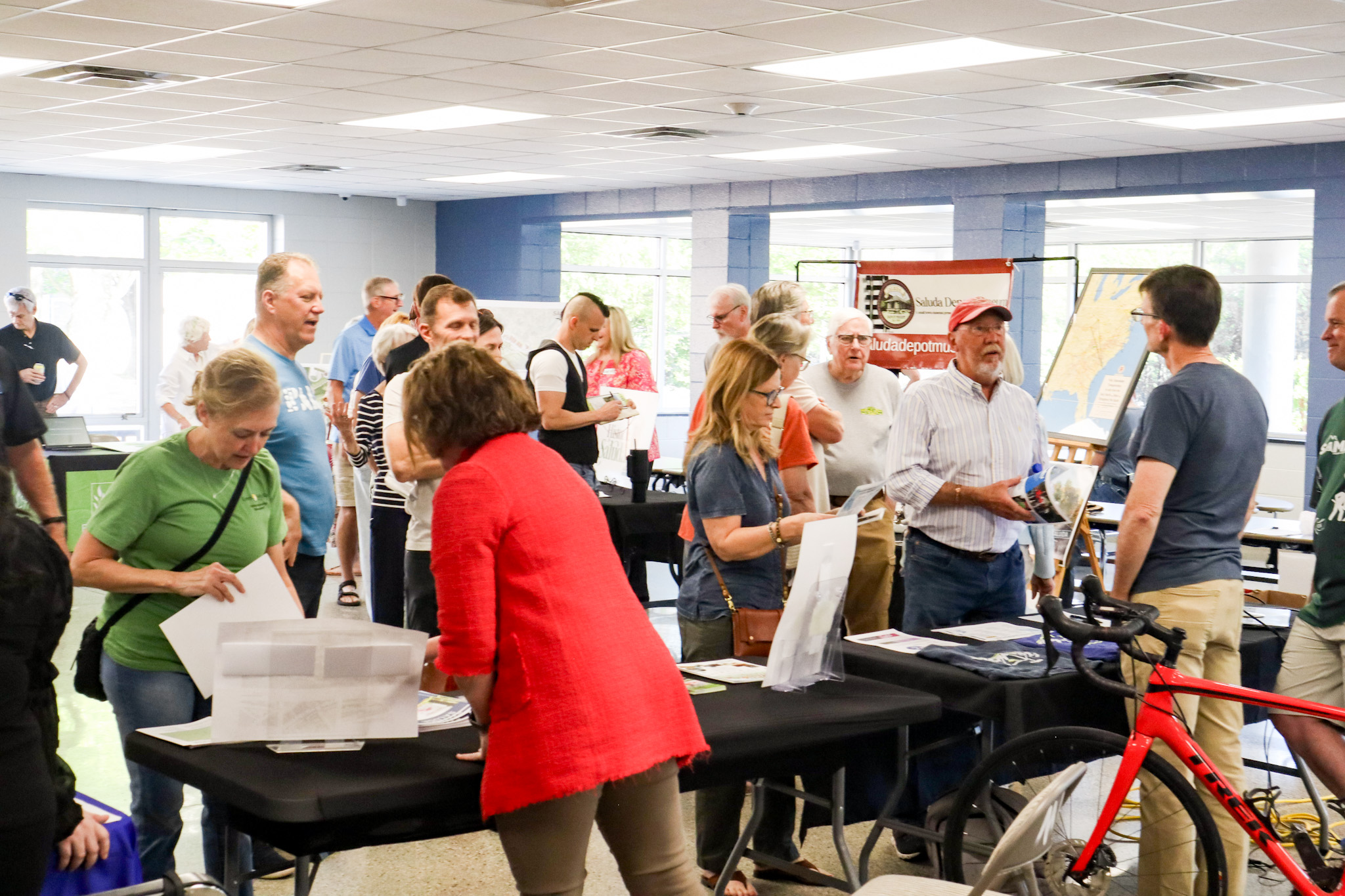
The forum opened with an information table session to ground the evening in relationships and resources. Attendees moved among tables hosted by community organizations whose work intersects with the trail, each offering a different lens on what the corridor could become. Staff from Conserving Carolina and PAL: Play, Advocate, Live Well were available to answer landowner questions and provide project updates. Representatives from the Ecusta Trail shared practical expertise in trail maintenance and operations. The Saluda Depot Museum, the Landrum Rail & History Museum, and Historic Saluda connected the project to the corridor's railroad heritage. The Friends of McCreery Park, corridor town representatives, local tourism associations, and small-business owners discussed downtown revitalization and economic opportunity. Local biking and health organizations, the Palmetto Conservation Foundation, the Saluda Community Land Trust, and several community and youth-serving organizations rounded out the room. These partnerships highlight that the trail is more than infrastructure. It's a platform for existing local efforts to connect and grow.
The seated program began with a welcome from Polk County Schools leadership and an introduction from the evening's moderator, Amy Allison, director of the NC Outdoor Economy Office. Rebekah Robinson, of Conserving Carolina and the Saluda Grade Trail Conservancy, opened the program by tracing the timeline that brought the project to this point.
Then came the part of the program that mattered most to the room: what the community has been telling the project team.
What the Community Said
Over nine months, the ARISE Grant Project Team reviewed 30+ regional plans, mapped 200+ partners, gathered 1,000+ survey responses, hosted seven roundtables, visited five corridor towns, and convened a 14-member Advisory Group.
The findings were strikingly consistent. 96% of local respondents identified clear benefits. The priorities people named, in order: safe recreation, safe transportation, conservation, health and wellness, regional connections, and local economic growth. Eight thematic concerns came up again and again, including parking, right-sized growth, local-first business, safety, communication, visible progress, heritage, and environment.
Three Plans, One Regional Roadmap
From that input, three integrated plans now form a comprehensive Regional Roadmap. Each plan includes detailed strategies, implementation frameworks, and action steps grounded in what corridor communities asked for. The accompanying 1-pagers provide accessible summaries of these plans:
- Community Engagement Plan. Three pillars (Regional Coordination, Partnerships & Communication, Community-Based Programs) built for a corridor that crosses two states, four counties, and a million residents. 95% of respondents support educational programming; 90% support community programs and events. Read the plan summary.
- Economic Development Plan. Up to $22 million in projected annual visitor spending across the four-county region. The plan treats parking, trailheads, and downtowns as economic infrastructure and lays out four activation zones along the corridor. 86% support managed economic growth; 83% want locally owned businesses to lead the way. Read the plan summary.
- Destination Marketing Plan. A brand system that gives the trail a recognizable identity (the Trail Badge), lets each town add its own character (Local Flavor), and ties it all together as one shared landscape. Built around four audiences: Neighbors, Friends & Family, Local Visitors, and Overnight Visitors. Read the plan summary.
A Panel and a Progress Update
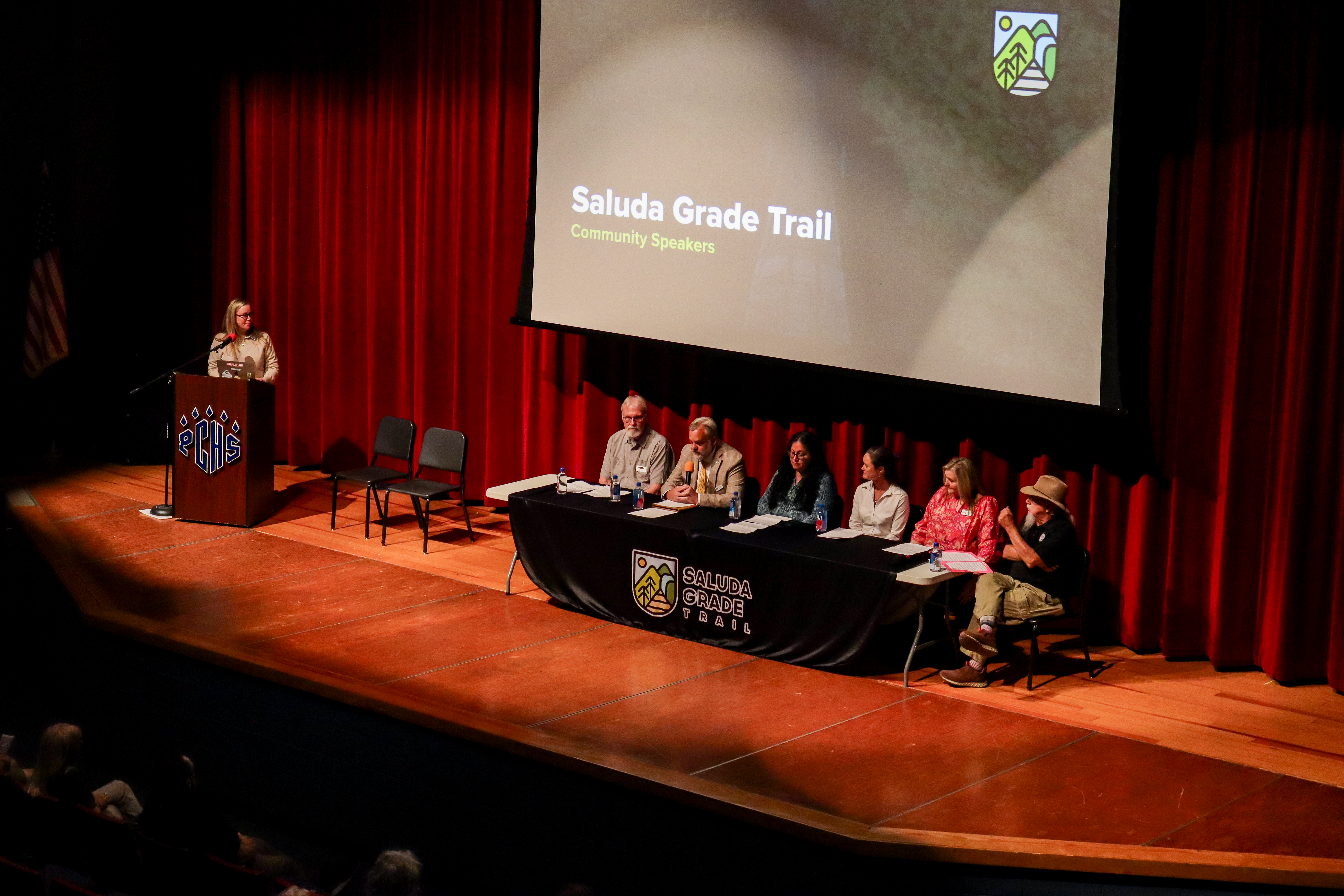
Amy then turned to a community panel to highlight the survey's frequent themes:
- Joe Lanahan, City Administrator for Inman, and Alan Peoples, Mayor of Tryon, discussed the timeline, process, and what collaboration among small towns can look like.
- Cindy Tuttle of Historic Saluda and Mike Reeves of the Saluda Depot Museum made the case for telling the whole story of this corridor: its people and cultures alongside its railroad.
- Dr. Lisa Broyles offered a regional public-health perspective on what the trail can mean for community wellness.
- Lourdes Gutierrez, Tryon Downtown Director and Advisory Group member, framed what local-first economic growth looks like in practice.
Leigh MacDonald of PAL closed the presentation on behalf of the entire Saluda Grade Trail team with a Track-to-Trail update. In SC, $6M is secured for design of 15.5 miles plus a first phase of construction, and electrical equipment removal is underway. In NC, Conserving Carolina is pursuing funding for two priority segments and expects a decision in late summer. Across both states, environmental reviews and rail-removal planning are underway.
Review the full presentation slides here
What Comes Next
The Spring Forum was a reminder: the trail is coming, but the work that shapes it is happening now.
Three ways to plug in today:
- Consider becoming a trail ambassador. Every town needs trained local stewards. Sign-up opportunities are coming.
- Bring your organization in. Schools, health providers, faith communities, businesses, and conservation groups all have a place in the partner network.
- Stay informed. Sign up for monthly email updates at saludagradetrail.org.
Thank you to everyone who joined us on April 23, to the business owners and community leaders who volunteered their time and expertise, and to the 1,200+ community voices that shaped this regional roadmap.

Help Us Realize the Saluda Grade Trail
Across the United States, inactive rail lines have found new life as vibrant rail trails. Now, we have the opportunity to create a beautiful new trail along the historic Saluda Grade rail line!

A new rail trail that travels from the rolling countryside of Upstate South Carolina, through historic and vibrant small towns, and into the spectacular mountain scenery of Western North Carolina.
© 2026 Saluda Grade Trail Conservancy. All Rights Reserved | Privacy & Legal |
Site by: ALINE, A Marketing Company